We met at MICAM — ITRE

Milano · Settembre

We met at MICAM.

Everything on this page, I learned selling shoes. Not building software. Ninety seconds from me, then two minutes about you.

No sales pressure. We start by listening. If we are not the right fit, we will say so.

What you get

Four ways to own the season.

Own your data, from €1,000

Flagged by your scorecard

Google Drive and Dropbox are useful places to store files. They are not databases. When information is spread across folders, spreadsheets and inboxes, a simple business question becomes a research project. We bring your operational data together, structure it, and put it in a system you own.

• Ask it anything. Which styles are selling through, which clients are slowing down, which markets are growing. Answers in seconds, not a week of digging.
• Ready for what is next. Every new AI tool is only as useful as the information you can give it. Organised, owned data plugs into new technology as it arrives.
• Yours, not theirs. Your history does not sit trapped inside someone else's software. It becomes an asset you control.

Organised data compounds in value while everything around it gets faster.

Own your stock, from €2,000

Flagged by your scorecard

A B2B portal is still a webshop, and your buyer represents ten other brands. Expecting them to log in, browse and discover what to reorder is leaving too much to chance. We bring the right stock to the right buyer, based on what they bought, what is available and what is actually relevant to them.

In your operation: a buyer opens Monday's email and the styles that fit their doors are already there, live availability attached. The portal stops being a passive shelf. It starts selling for you.

Own your sell-through, from €3,000

Flagged by your scorecard

The first order is only the beginning. We know what a client bought and what is selling in their market. The moment sell-out data lands, it turns into action: a relevant replenishment opportunity while there is still time to capture it. And when a colour performs across the region but sits still on one shelf, you know right then, not at season end.

Your data stops telling you what happened and starts helping you decide what happens next.

Most software is built by people who studied the problem. We did the job first.

Two minutes, honest answers

The Season Scorecard.

Eight honest questions about how your operation actually runs. Tap through and see where the season is leaking. We'll email you the results at the end — that's the only place this goes, no spam.

QUESTION 1 / 8
Do you actually know how often your buyers open your B2B, or are you hoping?

Not claims. Receipts.

What this looks like in production.

Sell-out data received curated reorder offer sent within minutes. Sub-line: Not a report to read. An order they can sign.
Every client gets their own set, personally addressed, matching their order, the same moment they are ready.Nobody digs through a media bank. Their assets are already in their inbox.
Customer service asked for a spec sheetDocuments found, sheet built, letter written, files sent. By the system.

In their words

“

They truly listen to the needs of a company and can relate to them through their own experience.

“Owners Kermo and Rainer have spent years and years in sales and after-service. They also received intensive training from one of the best salesmen I have ever met: Erti Kulberg. As a typical Dutchman, I don't like the ‘uurtje, factuurtje’ approach. With ITRE, the hours and approach are handled in a very commercial, transparent, and open way. Better together is exactly how they work.”

Krijn DijkmansCEO · Bronx Fashion B.V.

The goal is not to remove people from the business. It is to remove the work that gets in their way.

Who is writing this

I was born into shoes.

My family has been in the wholesale footwear business since 1992. I grew up in it, and eventually spent fifteen years working in the industry myself, representing Vagabond, Liu Jo, NeroGiardini, BRONX, U.S. Polo Assn. and Juicy Couture across the Baltics, Nordics and markets beyond the EU.

That taught me what distribution really looks like. It is not just presenting a collection and taking an order. It is knowing what will sell in each market. Building an order that makes commercial sense. Managing logistics and exports. Explaining terms clearly. Sometimes telling a client to buy less, because you want them to sell through, make money and come back next season.

It is answering quickly when something goes wrong, and making sure clients have what they need before they have to ask for it. And behind all of that is an enormous amount of work the customer never sees.

After fifteen years of doing that work, I started building the systems I always wished I had. For the brands I used to sell.

Most software is built by people who studied the problem. We did the job first.

Kermo at a trade fair, holding a shoe with a colleague

The turn

We build tools so people can stay people.

Every brand I worked with had its own way of doing things, but behind the scenes I kept seeing the same problems. Great products. Good people. Strong relationships. And too much of the operation depending on manual work, scattered information and systems that did not speak to each other. That is the part we change.

If a computer can do something reliably, it should. Moving information. Checking data. Preparing reports. Matching stock. Keeping systems connected. The repetitive work belongs to the system. Judgment, taste, experience and relationships stay with the people.

We do not start with automation. We listen, we map the process, and we reflect it back to you, so we are looking at the same picture before anything changes. Sometimes the first answer is not automation at all, the process itself needs fixing. Making an inefficient process faster does not make it better. It just makes the inefficiency faster.

In practice, the first project is a focused layer on top of your ERP, connected through an API and aimed at one problem the audit found. Small enough to prove value quickly. Solid enough to build on. We earn the bigger commitment, we do not ask for it up front.

If you book, this is all that happens

Listening first. Always.

We talk.

You walk us through the operation. NDA first if you prefer.

We audit and reflect it back.

Every process mapped, so we both know we see it the same way.

You get a fixed plan, fixed price.

Build it with us, build it with someone else, or keep it. A deal is a deal, terms do not change after the handshake.

The three questions everyone asks

Do we have to replace our ERP?+

No. We build the layer your ERP cannot: custom operational logic on your business rules, connected to what you already run. It's Perfect, Dynamics NAV, SAP B1, all fine.

What does it cost?+

Fixed scope, fixed price, agreed before we build. The audit defines it. No hourly billing, no open-ended scope, no surprises on the invoice.

How fast do we see something working?+

Phase one ships working software in weeks, not quarters. Each phase is useful on its own and funds the decision on the next one.

The object itself

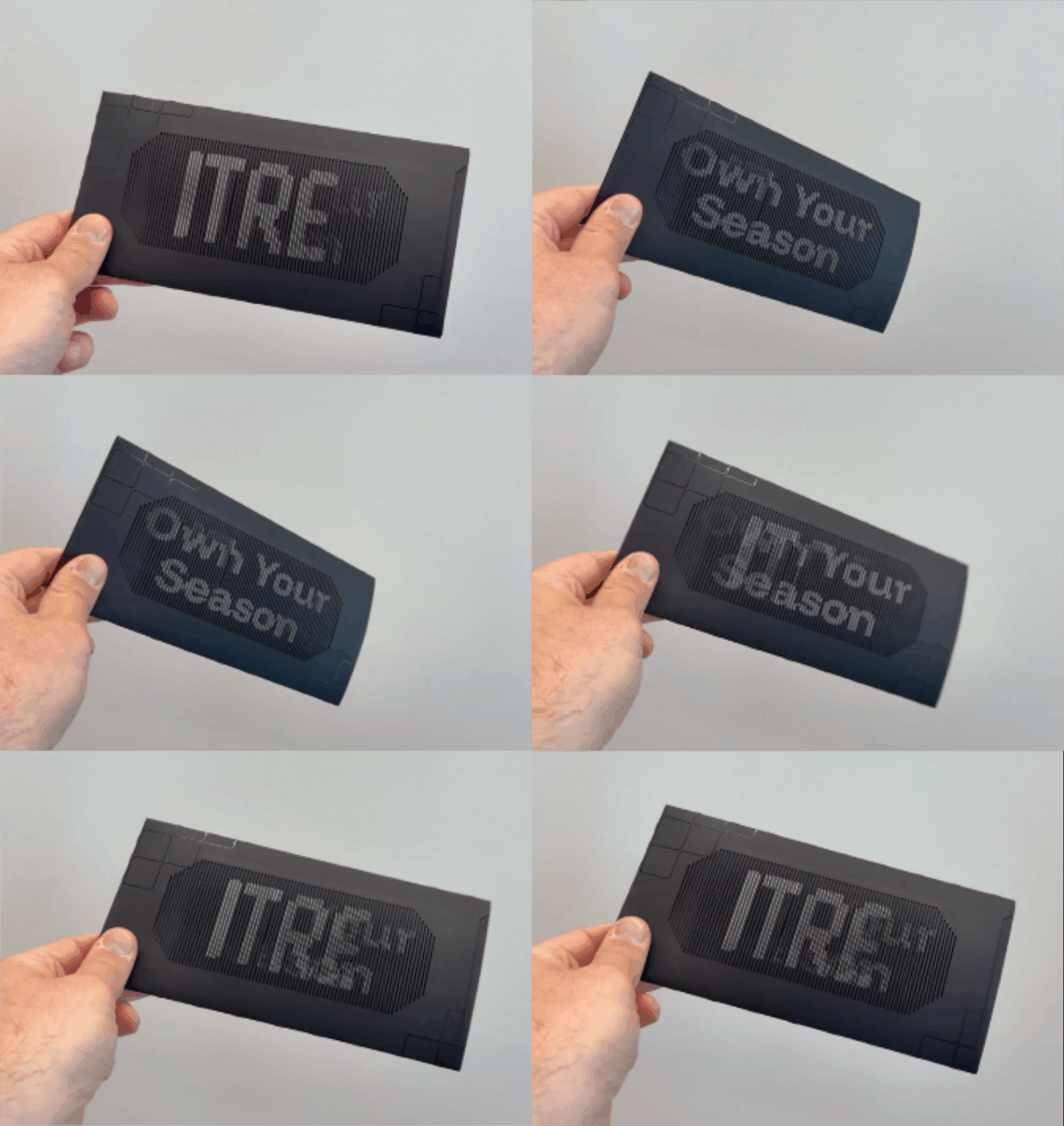
The flyer from the fair.

The ITRE flyer flipping from ITRE to Own Your Season

Matte black, one fold, and a front panel that changes its mind: tilt it and ITRE becomes Own Your Season. The same discipline we put into software, put onto paper.

Lost yours on the way home? Download the digital edition.

Download the flyer (PDF)

There is a hidden line inside the fold. Find it.

Kermo Kulberg

I am at MICAM. Message me and I will come to your stand. Milano, Settembre — Kermo Kulberg, ITRE.

Own your season

Let's look at your operation together.

Thirty minutes, your process, honest opinion. If you do not need us, we will tell you that too.

Book a call WhatsApp